
Sources for Rice County Former Owners
Which source helps depends on the era and the question. The Register of Deeds publishes no stated online coverage start, so treat any web-search cutoff as unconfirmed.
| Source | Years It Covers | Where Held | What It Shows |
|---|---|---|---|
| Recorded deeds | Cutoff unverified | Rice County Register of Deeds | Grantor, grantee, conveyance, description, locator |
| KSHS county-record group | 1875–1940 holdings | Kansas Historical Society | Archive and microfilm leads, including related proceedings |
| Ownership maps and plat books | 1902, circa 1919, 1971 | Kansas Historical Society | Period owner labels and parcel context |
| Tax rolls and tax-unit maps | Ask by year | Rice County Clerk | Administrative snapshot, not deed proof |
Begin at the Register of Deeds for a chain tied to one parcel. Archive sources then bridge gaps and add historical context, with every lead verified against recorded instruments.
Start With the Latest Rice Conveyance
The Rice County Register of Deeds records deeds, patents, affidavits, death certificates, mortgages, releases, plats, surveys, liens, leases, and related instruments. Its public page shows no stated coverage date. That leaves phone and counter service. Call 620-257-2931 or visit 101 West Commercial in Lyons with the parties, an approximate date, the instrument type, and the legal description in hand.
A current assessor or tax record gives you a starting name and parcel number. It will not give you the backward chain. The first real goal is the latest deed's exact grantee, grantor, legal description, date, and book/page or instrument number.
Walk the Rice County Deed Chain Backward
Keep a transfer table with one row per instrument: recording date, grantor to grantee, deed type, legal description, and locator. The description is what guards against same-name mix-ups.
- Retrieve the newest recorded deed and note its grantee and grantor.
- Search the grantor as a grantee on an earlier deed.
- Compare the full legal description, not merely the modern street address.
- Record corrections, estate affidavits, replats, easements, mortgages, and releases encountered between transfers.
- At the index limit, ask the custodian for the corresponding deed book or microfilm route.
- Grantor / grantee
- The transferring and receiving parties named in an instrument.
- Chain of title
- The connected sequence of conveyances for the same land.
- Reverse index
- An index route organized from the transferring party’s name.
- Quitclaim / warranty
- Different conveyance forms whose operative language must be read.
Three Historic Rice County Map Snapshots
The Kansas Historical Society ownership-map guide covers Rice County material from 1902, circa 1919, and 1971. A plat book can suggest a former owner. It can also show township context or a subdivision name at one point in time. It is a label, not a conveyance. Open the official historic plat and map guide to browse the holdings yourself.
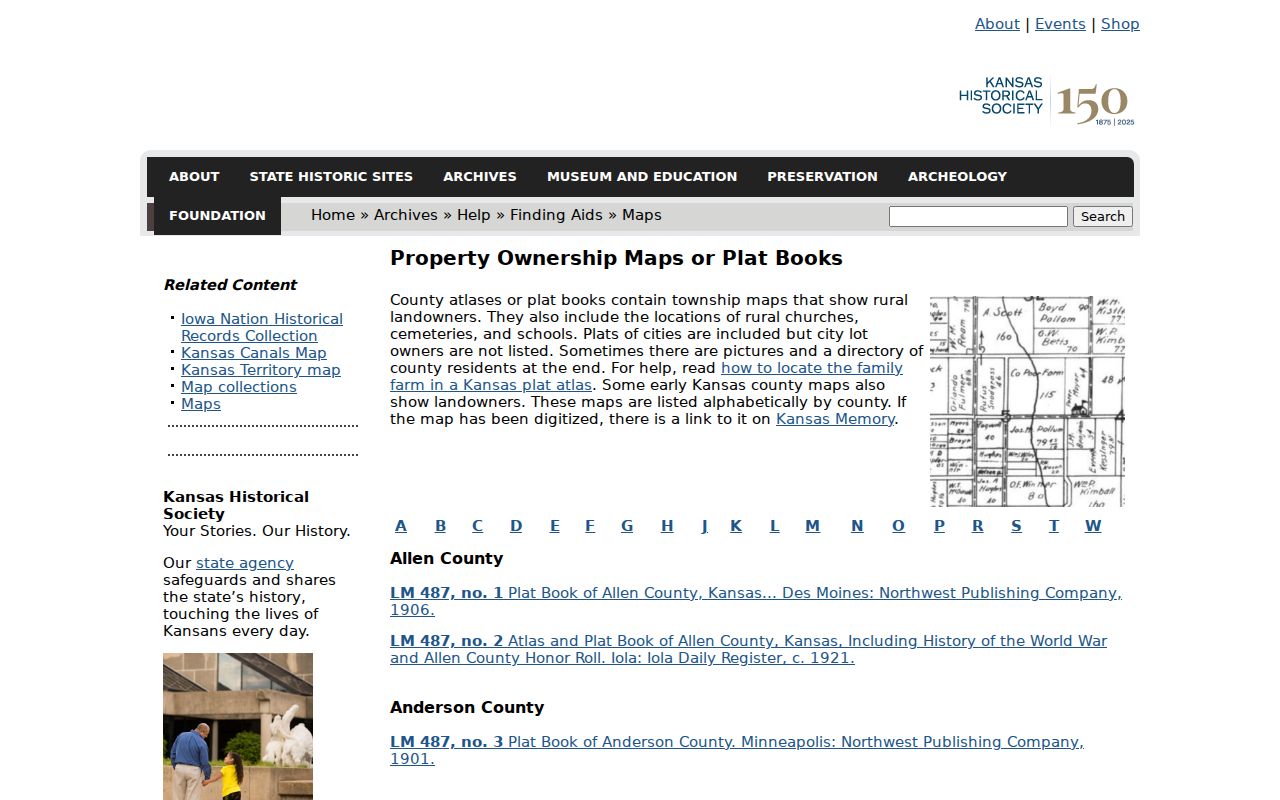
Take any name or lot reference from a historic map straight to the deed books. Verify the same legal description appears in the recorded instrument.
Probate Can Interrupt a Simple Owner Chain
Property does not always pass by ordinary sale. It can move through an executor deed, affidavit, death certificate, court order, or trust instrument. The KSHS Rice County records finding aid holds probate and district-court material. That material sits among its historical collections. Current court records sit with Rice County District Court and the Kansas public portal.
Kansas vital certificates are not public indexes. Restricted genealogy requests never replace a deed. Follow the recorded property instrument first. Then bring in an eligible certificate or probate file only to explain the documented transition.
Old Addresses Need Legal-Description Checks
Street names, house numbers, postal cities, and rural routes all change over time. Lot-and-block or section-township-range language stays constant, so it remains the true link between instruments. Historic newspapers and directories can surface a former address or resident. Treat them as leads only. A plat may have been vacated or replatted. Pull the recorded plat or survey that explains the change.
Note: Never join two generations of deeds by surname alone; confirm land description and recording references at every step.
Encumbrances Along the Ownership Timeline
Mortgages, assignments, releases, liens, easements, leases, and lis pendens travel beside the conveyance chain. Log each one in its own timeline row. Match every filing to its later release. These instruments explain a property's history, yet none of them is a deed transferring the owner, so keep the labels straight.
Use the office instrument list to name the exact document you want, rather than asking staff for open-ended title work.
Use Tax Rolls as Dated Ownership Clues
The Rice County Clerk keeps the certified tax rolls and tax-unit maps, while the Treasurer handles statements and balances. An old roll places a taxpayer or owner label beside a parcel for one tax year. It is a clue, not a conveyance. Note the year and field label. Then search deeds on both sides of that date.
This works best when a former owner changed names, a street address was rewritten, or an estate separated the billed party from the recorded grantee. The legal description and recording locator remain the controls. They keep a plausible historical clue from hardening into an unsupported chain link.
Set an Honest Rice County Research Cutoff
The online cutoff is unverified. The KSHS 1875–1940 range describes an archive group, not the recorder's full deed coverage. State your stopping point honestly. Name the last instrument you hold, its date and locator. Note the book or index searched. Note the specific source you could not reach. A gap in your work is not proof that earlier former owners never existed.
A known county record is not routinely accessible. Make a narrow request through the Rice County Clerk under the Kansas Open Records Act. Ask for an existing record. Specify a date range. Request a fee estimate when the search may take staff time.
Lawful use. Trace former owners for property history, estate work, or transaction diligence. Never use the chain to stalk, harass, or harm a living person.